

Skilled nursing facility (SNF) discharge planning is critically important. Preventable readmissions drive billions in healthcare spending, trigger direct financial penalties through Medicare's SNF Value-Based Purchasing program and strain the referral partnerships your facility depends on.
The path to safer, more stable transitions lies in a coordinated approach that integrates physiatry-led discharge planning, comprehensive assessment protocols and strategies like chronic care management (CCM) to ensure patients are ready to thrive at home.
Why SNF Discharge Success Is a Clinical and Financial Priority
Failed discharges reflect the quality of your care transitions, impacting your facility's financial health and reputation. Improving this process protects patients while securing your center's standing with referral partners and payers.
The System-Wide Impact of Failed Discharges
A failed discharge is an unplanned hospital readmission within 30 days. These events create serious consequences, including:
- Clinical consequences for patients: Patients readmitted shortly after discharge face disrupted recovery, increased risk of complications from repeated hospitalizations and a higher risk of death.
- Financial penalties for centers: When your readmission rates climb, Medicare's SNF Value-Based Purchasing program responds with direct financial penalties. In 2024, over 71% of SNFs were penalized based on their readmission performance.
- Strained referral partnerships: Hospitals grow hesitant to refer patients to centers with inconsistent discharge outcomes, limiting your census and revenue potential.
Discharge Planning Begins at Admission
Effective discharge planning starts the moment a patient arrives at your center. This proactive approach is a cornerstone of SNF discharge planning best practices.
From day one, your team should establish projected discharge goals and identify potential medical, functional and social barriers. Align therapy milestones with functional goals that reflect what patients will need to do at home. When you anticipate the transition of care from SNF to home from admission forward, you create time to solve problems rather than react to crises.
Redefining Discharge Readiness in Skilled Nursing Facilities
True discharge readiness requires a holistic view that integrates functional capacity, medication management and coordinated follow-up care. Your assessment must determine whether this patient can safely function in their home environment.
Clinical Stability as the Foundation of Safe Discharge Skilled Nursing
Clinical stability is nonnegotiable. Before any patient leaves your center, certain medical elements must be in place:
- Stable chronic condition management
- Complete medication reconciliation and appropriate deprescribing
- Adequate pain control for community-level function
- Clear outpatient provider handoff plan and coordination for durable medical equipment and home safety modifications
Medical stability alone isn't enough. A patient who's medically stable but functionally unprepared will struggle at home and likely return to the hospital.
Functional Criteria as SNF Discharge Success Predictors
Functional capacity is one of the strongest indicators of post-discharge success. Rehab discharge criteria must include measurable functional benchmarks that align with each patient's home environment and available support.
Ask these questions before discharge:
- Can the patient safely transfer from bed to chair to toilet?
- Can they ambulate the distances required by their home layout?
- Is their ability to perform activities of daily living (ADLs) consistent with the level of support available at home?
- Do they have the physical and cognitive stamina for daily routines and medication management?
Functional readiness that lags behind medical stability creates elevated readmission risk. These criteria are critical data points for any robust discharge readiness assessment in your SNF.
The Critical Role of Physiatry in Discharge Optimization
Physical medicine and rehabilitation — physiatry — elevates your facility's discharge process. Physiatrists remove barriers and align your entire interdisciplinary team, leading to more stable transitions.
Proactively Addressing Barriers to Transition of Care SNF to Home
A physiatrist's role in discharge planning is to anticipate problems and address them before they derail a discharge. Physiatry discharge planning includes:
- Optimizing pain management so patients can participate in therapy and build strength
- Managing complex conditions like spasticity or neurologic deficits that limit mobility
- Addressing polypharmacy that could affect cognition, balance or endurance at home
- Identifying subtle signs of medical instability before they escalate
The forward-thinking clinical oversight helps you prevent post-discharge readmissions by ensuring patients are truly ready for the next step.
Aligning Interdisciplinary Teams Around Rehab Discharge Criteria
The physiatrist leads your interdisciplinary team, ensuring therapy gains translate into real-world functional safety at home. They facilitate functional goal reviews in team meetings and coordinate collaboration between therapy, nursing and medical staff so everyone works toward the same discharge benchmarks.
This alignment is one of the benefits of interdisciplinary care teams, where everyone moves in the same direction with shared accountability for outcomes.
Integrating Chronic Care Management (CCM) Into the Discharge Process
CCM extends care coordination beyond your facility's walls. It supports patients through the most vulnerable post-discharge period, directly addressing the risks of readmission.
How CCM Supports Safe Transition of Care SNF to Home
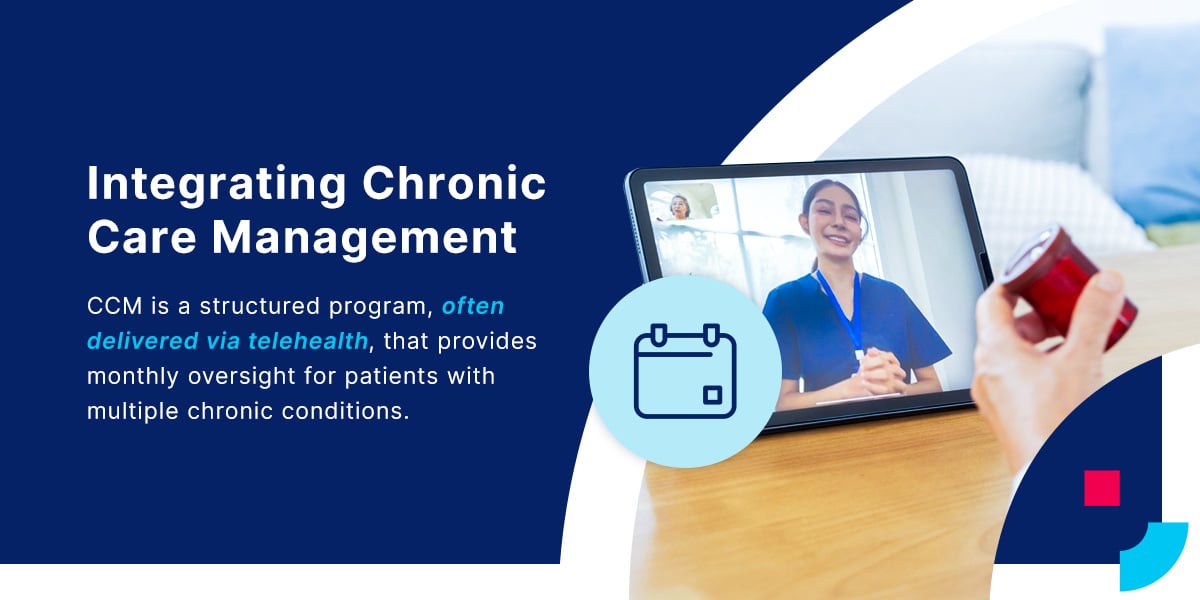
CCM is a structured program, often delivered via telehealth, that provides monthly oversight for patients with multiple chronic conditions.
It is effective in managing the conditions that lead to rehospitalizations. CCM coordinates care between your SNF team and outpatient providers, reinforces medication management, monitors high-risk conditions and enables early identification of patient decline.
Identifying Patients Who Benefit Most From CCM
Populations that meet the following criteria benefit significantly from CCM:
- Patients with two or more chronic conditions
- Those with a history of prior hospitalizations or readmissions
- Individuals with limited caregiver support or social resources
- Patients with cognitive impairment or a high medication burden
Matching the right patients with CCM support strengthens transitions and reduces preventable readmissions.
Strengthening the First 72 Hours After Discharge
The first few days at home are the highest-risk period. Structured communication and follow-up during this window can prevent post-discharge readmissions.
Structured Handoff and Follow-Up Protocols
Timely, structured follow-up within the first 72 hours is associated with reduced readmissions, especially for high-risk patients. Your handoff protocol should include these critical elements:
- Confirm primary care or specialist appointments before the patient leaves your center.
- Provide clear, easy-to-understand medication lists and instructions.
- Ensure warm handoff communication is sent to and confirmed by outpatient providers.
- Educate both patients and caregivers on who to call if problems arise.
When these steps are consistently executed, you close gaps that often lead to early readmissions.
Monitoring Early Warning Signs Post-Discharge
Early readmissions often occur because warning signs go unrecognized or unaddressed. You can prevent that failure by educating patients and caregivers on how to identify early signs of decline, such as:
- Increased shortness of breath or new chest pain
- Sudden confusion or changes in mental status
- Worsening pain or inability to perform daily activities
- Fever, new swelling or other signs of infection
Provide clear, simple escalation pathways. If certain symptoms appear, they should call your center or their CCM team. If more serious symptoms develop, they should contact their primary care provider or seek emergency care.
Building a Culture of Discharge Excellence
Discharge success is achieved through a facility-wide culture of excellence built on standardized systems, team accountability and physician-led oversight.
Standardizing Discharge Readiness Assessment SNF Protocols
Your center can build this culture by implementing concrete, actionable strategies:
- Develop structured discharge checklists that every team member uses consistently.
- Review rehab discharge criteria weekly in interdisciplinary meetings.
- Track 30-day readmissions alongside functional outcomes to identify patterns.
- Conduct root cause analysis on failed discharges to understand what went wrong and how to prevent recurrence.
- Create discharge dashboards tied to quality improvement initiatives so your leadership has real-time visibility into performance.
These systems, once embedded in your facility's DNA, make discharge excellence repeatable and measurable.
The Medrina Model: Physician-Led Discharge Stability
Medrina provides embedded physiatry leadership to prevent costly readmissions. Our physiatrists excel at early barrier identification and interdisciplinary collaboration, ensuring your team works in concert toward shared goals. We integrate strategies like CCM for high-risk patients, extending care coordination into the critical first 30 days at home.
Our approach grounds safe discharge practices in measurable, functional criteria rather than medical checklists alone. This physician-led model aligns your therapy, nursing and medical staff around discharge benchmarks that reflect real-world readiness.
Partner with Medrina for Physician-Led Discharge Excellence
Discharge success is measurable. The most effective approach integrates comprehensive assessment processes that align clinical stability with functional criteria and provides coordinated oversight during the vulnerable post-discharge period.
Our physician-led approach elevates discharge planning from reactive to proactive, combining early intervention with coordinated tools like CCM.
Contact us today to learn how our physician-led approach can support your facility's commitment to clinical excellence.

Other Articles



-1.png)